
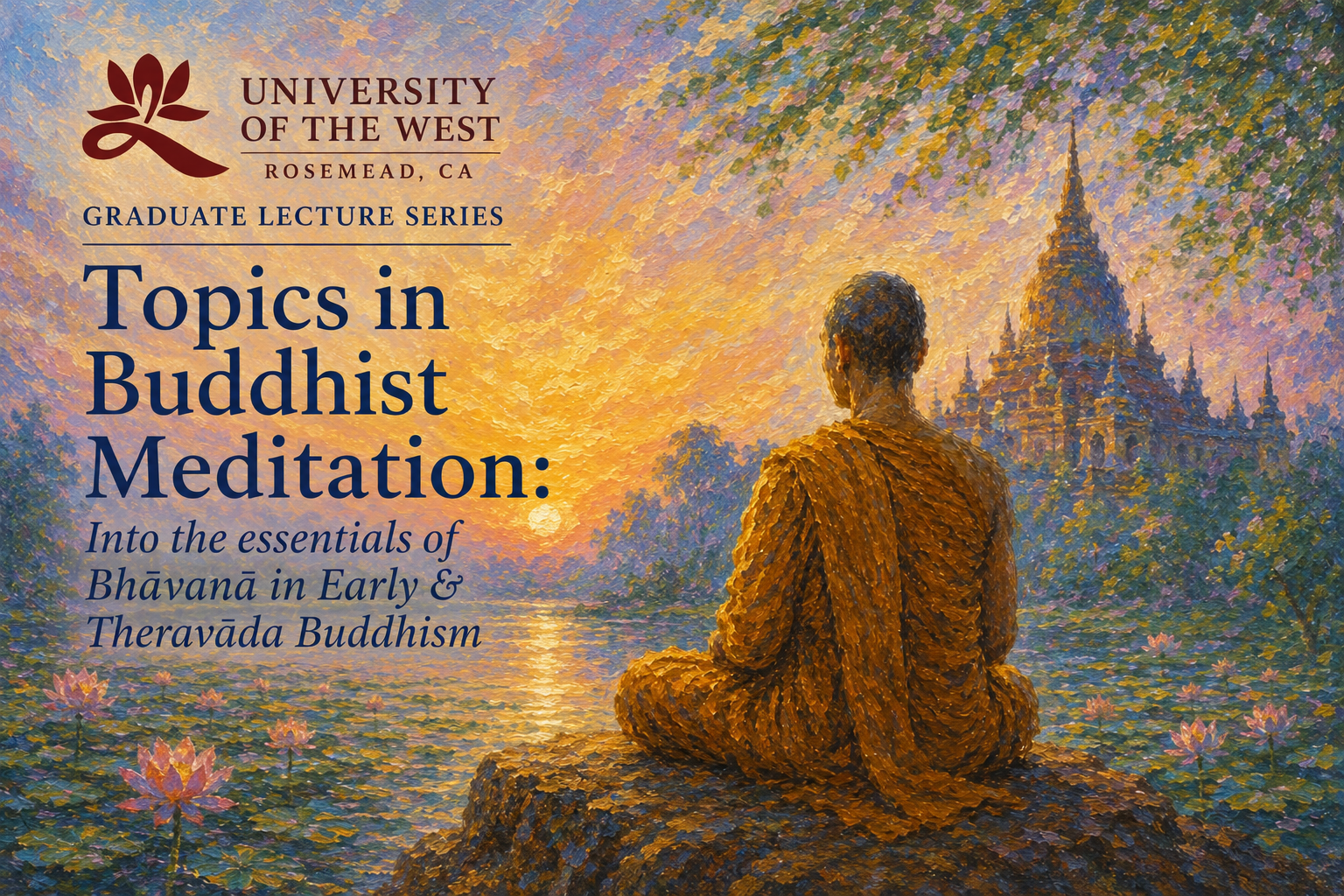
This course investigates the essentials of bhāvanā (mental cultivation) as originally defined, conceived, and systematized by the Buddha within the scheme of gradual training toward liberation. Grounded primarily in Early Buddhist Texts, the Abhidhamma, and the Pāli literature of the Theravāda tradition, the course examines how meditation — more precisely, the cultivation of samādhi (concentration) and paññā (wisdom) — functions as the irreplaceable engine of the soteriological path leading to the end of dukkha.
Students engage primary sources in English translation alongside leading secondary scholarship, tracing meditation theory from the Pāli Nikāyas through the great commentarial meditation manual, Visuddhimagga, and into the Abhidhamma literature that underpins classical meditation analysis. The course then examines the major Theravāda practice traditions (Mahāsi, Pa-Auk, Goenka) branched out from the 20th-century vipassanā movement, which later catalyzed the contemporary mindfulness movement and the growing field of scientific and evidence-based research in meditation. A brief survey of non-Theravāda meditation traditions and students’ sharing their research findings on specific topics in Buddhist meditation round out this course. Along the theoretical expedition into ancient Buddhist texts and living meditation traditions, short, guided practice sessions on various meditation themes as per the Pāli texts will be intercepted in lectures. By the end of the semester, students will possess both textual fluency and critical analytical tools to situate any Buddhist meditation tradition within its doctrinal, historical, and contemporary contexts.
- Trainer/in: Hung Nguyen
- Trainer/in: Tan Paññādīpa